Most businesses don't replace technology because it completely stops
working.
They replace it after months — sometimes years — of tolerating it.
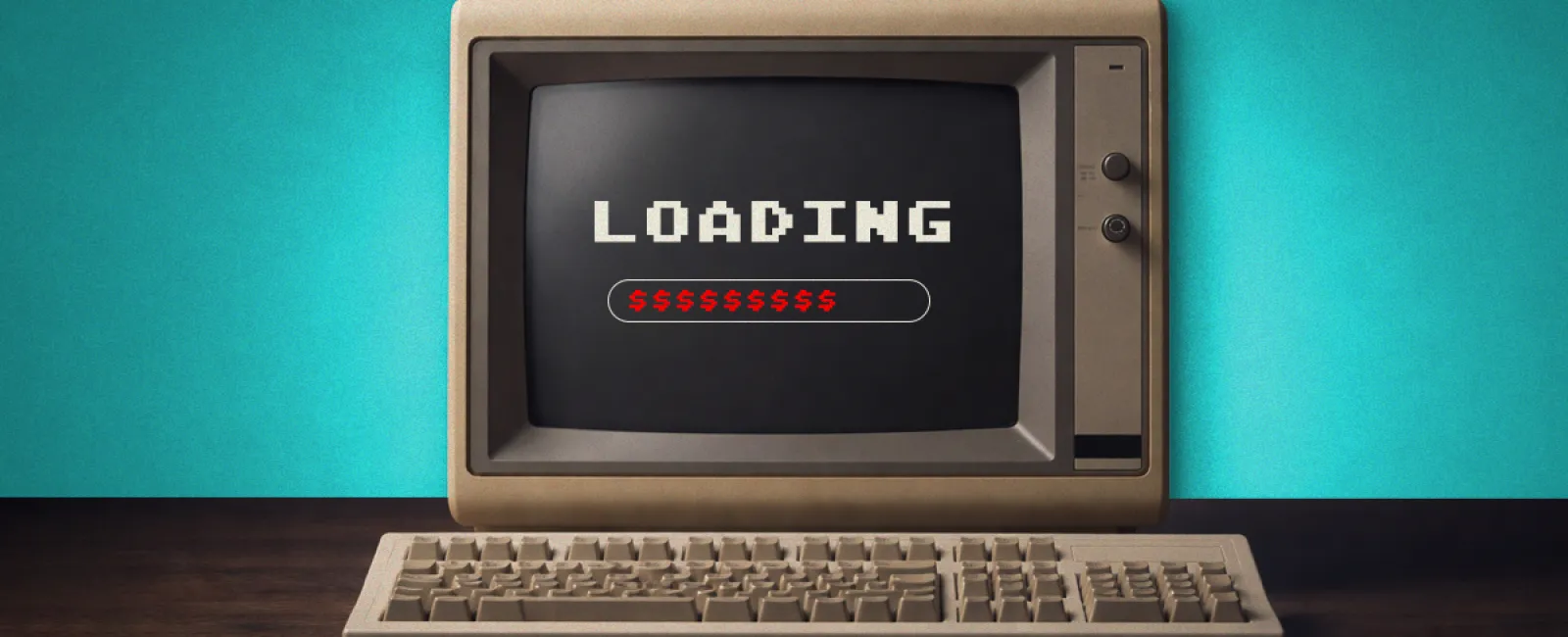
The slow computer.
The freezing screen.
The Wi-Fi that randomly drops.
The system everyone complains about but nobody wants to deal with right now.
It's not dramatic enough to feel urgent.
So it stays.
And month after month, your business keeps paying for it.
Outdated Technology Rarely Fails All at Once
Most aging systems don't suddenly die.
They slowly become harder to work with.
Things take longer than they used to:
- Files open slower
- Programs lag
- Restarts become routine
- Employees lose time waiting on
systems to catch up
Because the slowdown happens gradually, people adapt.
They work around it.
And eventually, those workarounds become normal.
The Real Cost Usually Isn't the Hardware
Most business owners look at old equipment and think:
"If it still works, why replace it?"
Fair question.
But the actual cost usually isn't the device itself.
It's everything surrounding it.
The Productivity Drain
Small delays don't feel expensive in the moment.
But over time:
- Slow logins
- Lagging systems
- Freezing applications
- Repeated restarts
Quietly steal hours from your team every week.
Nobody notices because it happens in tiny increments.
But those interruptions break focus, slow momentum and stretch simple
tasks into longer ones.
The Operational Drag
Older systems also tend to create more day-to-day disruption.
Connections become unreliable.
Software compatibility issues show up more often.
Employees spend more time troubleshooting and less time actually working.
And when people constantly expect technology to misbehave, they start
building workarounds just to get through the day.
That's usually a sign the environment is being tolerated instead of
supported.
The Hidden Cost Most Businesses Miss
Older equipment is often less efficient too.
It uses more power.
Generates more heat.
And requires more effort just to keep up with modern workloads.
Especially during the summer, older systems can put unnecessary strain on
both your equipment and your operating costs.
Newer systems are typically:
- Faster
- More efficient
- More stable
- Better equipped to support modern
software and cloud tools
Which means lower friction for your team and lower operational costs over
time.
What Changes When the Problems Go Away
When outdated systems finally get addressed, businesses usually notice
the difference immediately.
Not because everything suddenly feels futuristic.
Because work stops feeling unnecessarily difficult.
Things simply:
- Load faster
- Respond properly
- Stay connected
- Work the way people expect them
to work
Your team spends less time waiting, restarting, troubleshooting and
adapting.
And more time actually getting things done.
A Quick Gut Check
Ask yourself:
- Are there systems your team
constantly complains about?
- Have slowdowns and restarts
become "normal"?
- Are people building workarounds
just to stay productive?
- Are you delaying upgrades because
"it still technically works"?
If so, you're probably already paying the price — just gradually instead
of all at once.
Where We Come In
We help businesses figure out:
- Which systems are actually
costing them money
- What should be replaced now vs.
later
- How to improve performance
without unnecessary spending
That means:
- Practical recommendations
- Right-sized upgrades
- Minimal disruption during
transitions
- Ongoing support so things stay
reliable long-term
No overselling. No replacing things just to replace them.
Just making sure your technology supports the business instead of quietly slowing it down.
Click here or give us a call at (805) 295-8883 to schedule your free 10-Minute Discovery Call.
P.S. If you know another business owner constantly dealing with slow systems,
freezing computers or recurring tech frustrations, send this their way.
They're probably paying for outdated technology more than they realize.